
Used Motorcycle Exhausts UK: Buying Guide for Riders
Introduction
A motorcycle exhaust system plays an important role in managing exhaust gases, controlling noise and contributing to the overall performance and appearance of a bike. When an original exhaust becomes damaged, corroded or needs replacing, purchasing a used component can be a practical option.
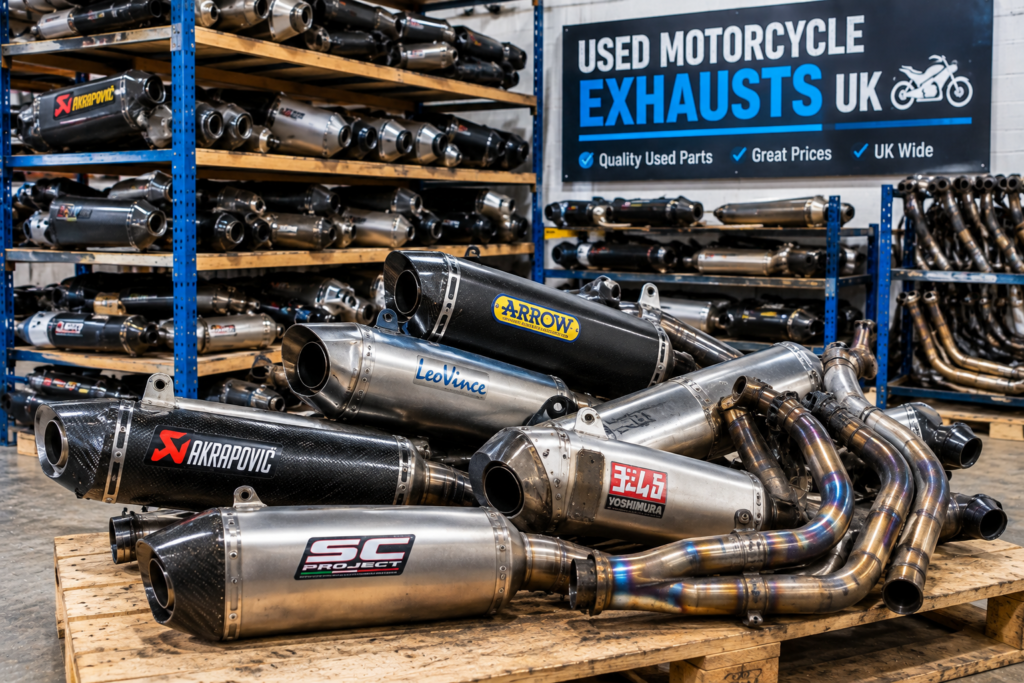
Used Motorcycle Exhausts UK can provide riders with access to replacement systems, silencers, headers and other exhaust components at potentially lower prices than new parts. They can also be useful for older motorcycles where finding replacement components can be more difficult.
However, buying a used exhaust requires careful consideration. Compatibility, corrosion, mounting points, condition, noise levels and the motorcycle’s original specifications all need to be checked before purchasing.
This guide explains what riders should look for when buying Used Motorcycle Exhausts UK and how to choose a suitable replacement.
Why Buy Used Motorcycle Exhausts UK?
There are several reasons riders choose used exhaust components.
1. Potentially Lower Cost
One of the biggest advantages is the possibility of saving money compared with purchasing a brand-new exhaust system.
A good-quality used exhaust can provide a practical replacement when your existing system has suffered damage or corrosion.
2. Useful for Older Motorcycles
Older motorcycles can sometimes have limited availability of new replacement exhausts. Used parts can provide additional options for bikes that are no longer in production.
3. Original Equipment Availability
Used motorcycle exhausts may include original equipment components removed from another motorcycle.
For riders looking to retain the original appearance and specification of their bike, this can be useful.
4. Restoration Projects
Used exhaust systems can also be valuable for motorcycle restoration projects where maintaining an original-style appearance is important.
10 Things to Check Before Buying a Used Motorcycle Exhaust
Before purchasing Used Motorcycle Exhausts UK, carefully check the following factors.
1. Confirm Motorcycle Compatibility
The first step is confirming that the exhaust is designed for your exact motorcycle.
Provide:
- Manufacturer
- Model
- Year
- Engine capacity
- Engine version
- Exhaust configuration
Even motorcycles with similar names can have different exhaust designs between model years.
2. Check the Exhaust Type
Motorcycle exhaust systems can have different configurations.
These may include:
- Full exhaust systems
- Slip-on silencers
- Headers
- Downpipes
- Mid-pipes
- Link pipes
- Catalytic sections
- Exhaust silencers
Make sure you know exactly which component you are purchasing.
A used silencer alone may not replace a complete exhaust system.
3. Inspect for Rust and Corrosion
Corrosion is one of the most important things to check when buying a used exhaust.
Inspect the:
- Silencer
- Header pipes
- Welds
- Mounting brackets
- Flanges
- Clamps
- Joints
- Internal and external surfaces
Surface discolouration may be cosmetic, but serious corrosion can weaken the exhaust and create holes or leaks.
4. Look for Cracks and Damage
Exhaust systems can be damaged by accidents, impacts, falls and poor installation.
Look for:
- Cracks
- Dents
- Broken brackets
- Damaged mounting points
- Distorted pipes
- Split seams
- Previous repairs
Pay particular attention to the areas around brackets and welds.
5. Check the Mounting Points
A replacement exhaust needs to attach correctly to the motorcycle.
Compare:
- Mounting bracket position
- Bolt holes
- Exhaust flange
- Pipe diameter
- Connection points
- Silencer position
An exhaust that cannot be mounted correctly may require additional modifications.
6. Check for Exhaust Leaks
A damaged exhaust may allow exhaust gases to escape before reaching the end of the system.
Signs of a potential leak can include:
- Unusual exhaust noise
- Soot around joints
- Visible holes
- Damaged gaskets
- Cracks around welds
- Exhaust fumes escaping from an unexpected location
A used exhaust should be checked carefully before installation.
7. Consider the Exhaust’s Noise Level
Exhaust noise is an important consideration when buying a used motorcycle exhaust.
Some aftermarket exhausts are designed to produce a louder or sportier sound. However, riders should ensure that any replacement exhaust is appropriate for road use and complies with applicable requirements.
If a silencer includes a removable baffle or similar component, check its condition and whether it is present.
8. Check for Missing Components
A used exhaust may not always be sold as a complete installation package.
Ask whether the purchase includes:
- Exhaust brackets
- Clamps
- Springs
- Gaskets
- Heat shields
- Bolts
- Link pipes
- Mounting hardware
Missing components can increase the final installation cost.
9. Check the Exhaust’s History
If possible, ask the seller where the exhaust came from.
Useful questions include:
- Which motorcycle was it removed from?
- What year was the motorcycle?
- Was the bike involved in an accident?
- Has the exhaust been repaired?
- Has it been modified?
- Has it been repainted?
- Are all mounting components included?
The more information you have, the easier it is to assess whether the exhaust is suitable.
10. Compare Part Numbers
Where available, compare the part number of the replacement exhaust with the original component.
Part numbers can help confirm whether a component was manufactured for a particular motorcycle.
This can be particularly useful when searching for Used Motorcycle Exhausts UK for older or less common motorcycles.
OEM vs Aftermarket Used Exhausts
One important decision is whether you need an original equipment exhaust or an aftermarket system.
| Feature | Used OEM Exhaust | Used Aftermarket Exhaust |
|---|---|---|
| Original specification | Usually designed for the motorcycle | Depends on manufacturer |
| Appearance | Factory-style | May have a different design |
| Fitment | Often model-specific | Must be checked carefully |
| Sound | Generally factory-oriented | Can vary considerably |
| Availability | Depends on motorcycle | Depends on brand and model |
| Modification | Usually minimal | May require additional components |
Neither option should be selected without checking compatibility with the motorcycle.
Full Exhaust vs Slip-On Exhaust
Understanding the difference can help you avoid buying the wrong component.
Full Exhaust System
A full system may replace several parts of the original exhaust, potentially including headers, mid-pipes and silencer components.
It is important to check every connection point before purchasing.
Slip-On Exhaust
A slip-on typically replaces the rear silencer section while retaining much of the original exhaust system.
It may be easier to install, but compatibility still needs to be confirmed.
Which Motorcycle Models Use Used Exhausts?
Used Motorcycle Exhausts UK may be available for a wide variety of manufacturers, including:
- Honda
- Yamaha
- Suzuki
- Kawasaki
- KTM
- Triumph
- Ducati
- BMW
- Husqvarna
- Harley-Davidson
Availability depends on the motorcycle model, age, demand and used-parts stock.
Always search using the exact motorcycle details rather than relying only on the manufacturer name.
Used Motorcycle Exhausts UK: What Affects Price?
The cost of a used motorcycle exhaust can vary considerably.
Motorcycle Model
Exhausts for popular motorcycles may be easier to source, while rare models may have fewer replacement options.
Condition
A clean exhaust with minimal corrosion and no structural damage will generally be more desirable than one requiring significant repairs.
Exhaust Type
A complete exhaust system will naturally differ in price from a single silencer or header section.
Brand
Original manufacturer exhausts and recognised aftermarket systems can have different values depending on demand and condition.
Included Components
An exhaust supplied with brackets, clamps, link pipes and other required components can provide better value than a bare component that requires additional parts.
Common Mistakes When Buying Used Motorcycle Exhausts UK
Avoid these common mistakes when purchasing a replacement.
Buying Without Checking Fitment
Never assume that an exhaust will fit because it looks similar to your original component.
Ignoring Corrosion
Light surface corrosion may be manageable, but serious rust can compromise the exhaust.
Forgetting Mounting Hardware
A cheap exhaust can become more expensive if brackets, clamps and other components are missing.
Choosing an Exhaust Only for Sound
Sound should not be the only consideration. Compatibility, condition and suitability for road use are also important.
Not Asking About Previous Repairs
Welded or repaired areas should be inspected carefully.
Ignoring Exhaust Leaks
Leaks can indicate cracks, damaged joints or deteriorated components.
How to Inspect a Used Motorcycle Exhaust
If you can inspect the exhaust in person, use a simple checklist.
Exterior Inspection
Look for:
- Rust
- Dents
- Scratches
- Cracks
- Discolouration
- Broken brackets
- Damaged welds
Connection Inspection
Check:
- Flanges
- Clamps
- Joints
- Mounting holes
- Pipe ends
- Sealing surfaces
Internal Condition
Where practical, check for signs of severe internal deterioration, loose internal components or damage to the silencer.
Hardware Check
Make sure the required mounting hardware is present or available separately.
Used Motorcycle Exhausts UK for Restoration Projects
Used exhaust systems can be especially useful for restoration projects.
A rider restoring an older motorcycle may want to maintain its original appearance rather than installing a modern aftermarket system.
A used OEM exhaust can help achieve a more authentic restoration, provided it is compatible and in suitable condition.
Before buying, compare the exhaust design, mounting points, pipe configuration and part numbers with the original motorcycle specification.
Are Used Motorcycle Exhausts Worth Buying?
A used exhaust can be a sensible option when you find a component that:
- Matches your motorcycle
- Has no serious structural damage
- Has acceptable corrosion levels
- Includes the necessary mounting components
- Is suitable for your intended use
- Can be installed correctly
The lowest purchase price is not always the best value. Consider the total cost of the exhaust, additional components, repairs and installation.
Used Motorcycle Exhaust Buying Checklist
Before ordering, confirm:
- Motorcycle make
- Exact model
- Model year
- Engine capacity
- Full system or slip-on
- Exhaust compatibility
- Pipe dimensions
- Mounting points
- Corrosion level
- Cracks or dents
- Exhaust leaks
- Brackets included
- Clamps included
- Heat shields included
- Gaskets required
- Part number
- Previous repair history
- Road-use suitability
This checklist can help reduce the risk of buying an unsuitable replacement.
Why Choose Quality Used Motorcycle Exhausts?
Choosing the right used component is about more than saving money. A suitable exhaust should provide the correct fitment and be in a condition that makes sense for your motorcycle.
Quality used parts can be particularly useful when:
- A new replacement is expensive
- Your motorcycle is older
- The original exhaust is no longer readily available
- You need an OEM replacement
- You are restoring a motorcycle
- You need a replacement after accidental damage
Careful inspection remains essential regardless of price.
Ready to Find Used Motorcycle Exhausts UK?
Looking for the right replacement exhaust? Contact us today with your motorcycle’s make, model, year, engine capacity and the type of exhaust you need.
We can help you identify the correct exhaust specification and find a suitable used component based on your motorcycle.
Whether you need a complete system, silencer, header or another exhaust component, getting the fitment checked before purchasing can help you avoid wasted money and installation problems.
Don’t settle for an exhaust that may not fit. Get the right details checked and find a suitable used replacement for your motorcycle.
Final Thoughts
Buying Used Motorcycle Exhausts UK can be a practical way to replace a damaged, worn or missing exhaust while managing motorcycle repair costs.
However, compatibility and condition should always be your first priorities. Check the motorcycle model, year, engine capacity, exhaust type, mounting points, corrosion, cracks, previous repairs and included components before buying.
Whether you need an OEM exhaust for a restoration project or a replacement silencer for everyday riding, careful research can help you find a suitable used motorcycle exhaust.
FAQs About Used Motorcycle Exhausts UK
Are Used Motorcycle Exhausts UK cheaper than new exhausts?
Used motorcycle exhausts are often available at lower prices than new replacements, although the final cost depends on the motorcycle, exhaust type, brand, condition and availability.
How do I know if a used exhaust will fit my motorcycle?
Check the exact make, model, year, engine capacity, exhaust configuration, mounting points and part number where available.
Should I buy a used OEM motorcycle exhaust?
A used OEM exhaust can be useful when you want to maintain the original motorcycle specification or appearance. Always inspect its condition and confirm compatibility.
What should I check on a used motorcycle exhaust?
Check for rust, corrosion, cracks, dents, damaged welds, broken brackets, leaks and missing mounting components.
Can I buy a used motorcycle silencer separately?
Yes, some used exhaust sellers offer individual silencers rather than complete exhaust systems. Confirm that the silencer is compatible with your existing exhaust configuration.
Are aftermarket used motorcycle exhausts suitable for road use?
Suitability depends on the specific exhaust, motorcycle and applicable requirements. Check the exhaust’s specification and ensure it is appropriate for your intended road use.
Is a rusty motorcycle exhaust worth buying?
Light surface corrosion may be manageable, but serious corrosion, holes or structural damage can make an exhaust unsuitable or expensive to repair. Inspect it carefully before buying.
Can used exhausts improve motorcycle performance?
The effect depends on the exhaust design, motorcycle and overall setup. A replacement exhaust should be selected based on compatibility and intended use rather than assuming that any aftermarket component will improve performance.